
Why 2026's biggest creator economy shift is about ownership, not output, and what it means for how you build
If you've felt like the goalposts moved again this year, you're not imagining it. Going viral used to be the whole game. Now it's barely the opening move. The creators winning in 2026 aren't the ones with the biggest spike on one platform. They're the ones who've built something that survives an algorithm change, a platform ban, or a bad month of reach. Industry commentary has landed on a name for it: creators are becoming small media companies.
It sounds like a big claim for someone posting outfit reels between a day job and a load of washing. But once you see the shift, it changes how you plan the next twelve months.
What "small media company" actually means
For most of the last decade, being a creator meant being a supplier. You made content, a platform distributed it, and you got paid (sometimes) in reach, and occasionally in cash via ad revenue shares or brand deals. The platform owned the relationship with your audience. You just borrowed it.
The small media company framing flips that. Instead of one content stream feeding one platform, you're running multiple things at once: content, yes, but also a product or two, a community space, maybe an email list that's entirely yours, and a handful of income lines that don't all depend on the same algorithm staying kind to you. You're not just making posts, you're making editorial decisions, the same way a small publisher or a niche magazine would.
The word doing the heavy lifting here is "owned." Owned audience. Owned distribution. Owned data, even, in the sense that you know who your people are instead of hoping the platform keeps introducing you to them.
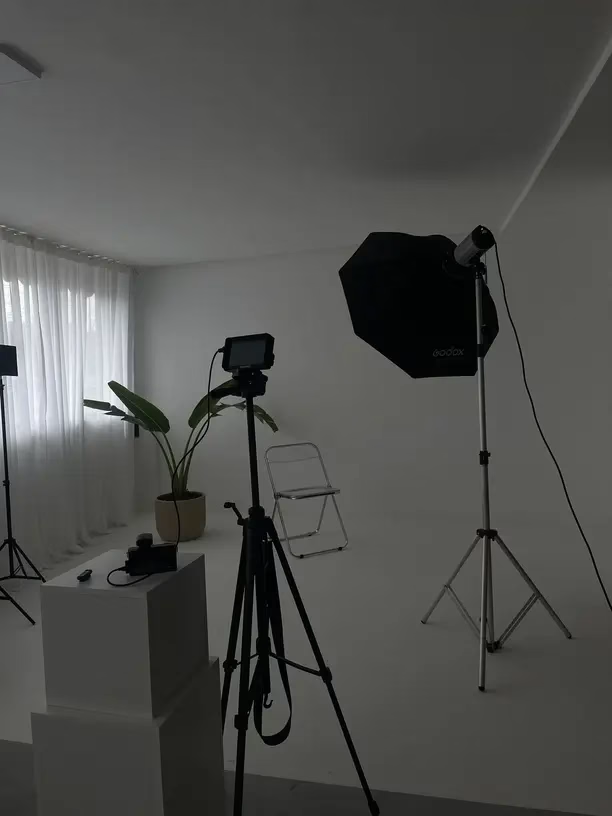
Similar ring light and softbox kit:
The numbers behind the shift
This isn't just a vibe. Goldman Sachs Research projects the global creator economy could grow from roughly US$250 billion to close to US$480 billion by 2027. Different analysts land on different totals depending on what they count, but every estimate points the same direction: fast, sustained growth.
Substack is a useful data point for the "own it, don't rent it" argument specifically. The platform has reported around 35 million active subscriptions, with paid subscriptions roughly doubling from about 2 million in 2024 to around 5 million in 2025. That doesn't prove newsletters suit every creator. It shows audiences will follow a creator into a space the creator actually controls, and that's turning into the norm rather than the exception.
At the same time, organic reach on public feeds keeps getting harder to rely on, and more of the real relationship-building is happening in smaller, more private spaces: close friends lists, Discord servers, WhatsApp channels, paid communities. The public feed has become the discovery layer. The owned space is where the relationship, and the revenue, live.
What this looks like in practice
You don't need five income streams and a Substack by next Tuesday. In practice, the shift shows up as a few smaller decisions, stacked over time.
Content still comes first, because none of the rest works without an audience who trusts you. But the content now has a second job: pointing people somewhere you control. A caption that mentions the newsletter. A story that links to the shop. A community space mentioned once a fortnight, not shoved into every post.
Source: Maria Dilley via Dupe (dupephotos.com)
Revenue starts to diversify on purpose rather than by accident. Brand deals are still part of the picture for a lot of creators, but they sit alongside something else, whether that's digital products, affiliate income, coaching, or a paid membership tier. The goal is to stop being one bad quarter away from having nothing, not to abandon brand work entirely.
I broke this down in more depth in Monetise Your Passion: Ultimate Blueprint for Impactful Content Creation, if you want the fuller version.
And creators are increasingly thinking in terms of a body of work rather than a feed: a defined point of view, a recognisable aesthetic or angle, the kind of thing that makes someone say "that's so [your name]" rather than just scrolling past. I go deeper on building that kind of consistency on one platform in Building Your Personal Brand on TikTok: Authentic Engagement Tips.
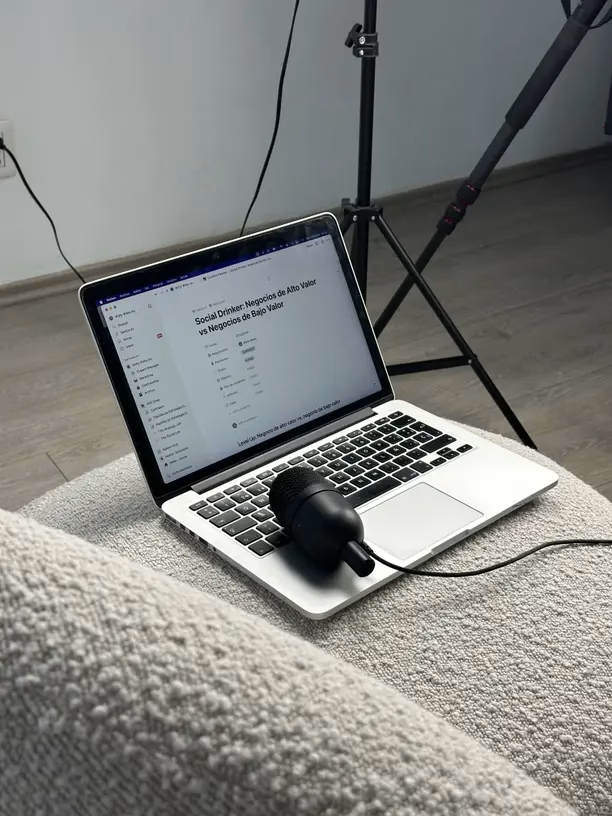
Mic and laptop stand pictured:
Where to start
If none of your income or audience exists anywhere you fully control yet, that's fine, most creators are in exactly that position. The shift doesn't require a rebrand. It requires one deliberate first step.
Pick the one owned channel that fits how you already communicate. If you're a writer at heart, that's probably an email list. If you're more of a group-chat energy person, a Discord or a close-friends broadcast channel might fit better. Don't try to build all of it at once.
Then give people a reason to go there, not just a link. A behind-the-scenes thought you wouldn't post publicly. Early access to something. The version of you that's slightly less curated than the main feed.
And be patient with the maths. An owned audience of a few hundred engaged people is worth more, in both revenue and stability, than tens of thousands of passive followers you're renting from an algorithm that could change its mind about you tomorrow.
The takeaway
Going viral still feels good, and it's still a useful discovery tool. But it was never going to be the foundation of a sustainable creative career, because you don't own it. The creators building something durable in 2026 are the ones treating themselves less like a content account and more like a small, deliberate media business, one owned relationship at a time.
If you're only just starting to think this way, you're in good company. Most creators are figuring this out in real time too.
It's also why trend cycles move fast and fade faster than an owned platform does. If you want a live example, I broke down this week's 2016 nostalgia trend and why it's the kind of moment that's fun to ride but won't build anything lasting on its own.
What does owning your audience look like for you right now? I'd love to hear where you're at, drop it in the comments. And if you want more of this kind of thinking on building a creative career that isn't entirely at the mercy of an algorithm, subscribe to Join the Muse, my newsletter through Kit, where I go deeper on exactly this.