
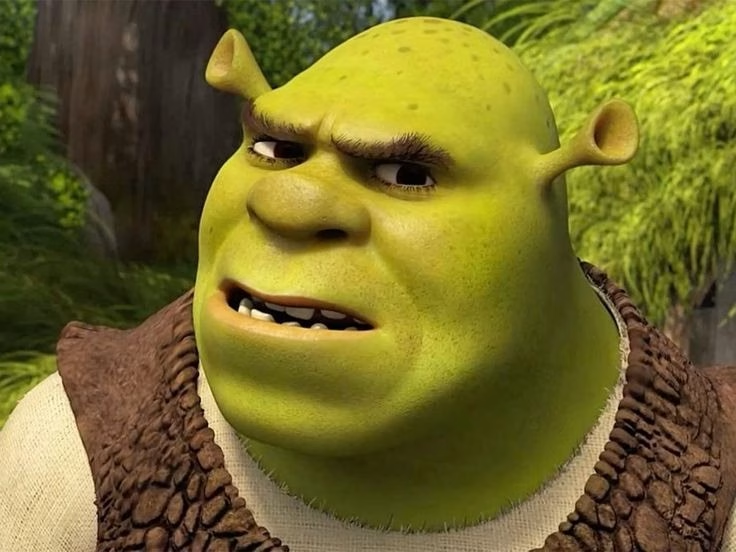
Scroll TikTok for more than five minutes right now and you will hit someone confessing they got "shrekked." Not eaten by a swamp-dwelling ogre. Fallen for someone they did not expect to fall for, and liked it more than they were prepared to admit.
Shrekking is the dating term dominating group chats and comment sections this year, and it is doing something more interesting than the average micro-trend. It is forcing a generation raised on swiping to ask why they ever built a checklist for attraction in the first place.
Shrekking, Defined
The term borrows its name from the DreamWorks ogre and describes dating someone you assumed was "below your league." The theory behind it, as it started circulating on dating apps and TikTok, was that dating a so-called downgrade meant you would have the upper hand. Better treatment. Less competition. An easier ride.
That is not how it plays out for most people who use the word. The ones who talk about getting shrekked usually describe the opposite of an easier ride. They talk about being caught off guard by how much they actually like the person. The joke starts as "I can't believe I'm into them" and turns into a real relationship, minus the ego.
It is a clunky name for an old story: you write someone off on paper, and they turn out to be the best thing that has happened to you in years.

Why This Is Blowing Up Right Now
Shrekking did not appear out of nowhere. It is landing on top of a broader shift in how people are approaching dating in 2026, one that has been building since the exhaustion of swipe culture set in.
A few things are converging at once:
- Singles are openly naming a preference for what surveys call a "low-key lover," someone chill and low-drama, over a partner chosen for how they look on paper.
- People are pushing back against dating as performance. They are tired of curating a version of themselves for a first date and want interactions that feel grounded instead of choreographed.
- Younger daters increasingly treat status-driven attraction, the job title, the height, the follower count, as a red flag rather than a drawcard, having watched older generations chase it and burn out.
Shrekking is the internet's shorthand for that shift. It gives people a funny, self-deprecating way to admit they let go of a checklist and it worked out.
The Lana Del Rey Effect
Pop culture already has a reference point for why this resonates: Lana Del Rey and her husband, Jeremy Dufrene, an alligator tour guide from Louisiana. The pairing reads online as one of the more charming celebrity love stories going, precisely because it ignores status matching so plainly. Two people met, liked each other, and built a life together in the bayou, with no expectation that a pop star's partner needs a certain job title to make sense.
That story keeps circulating because it scratches the same itch shrekking does. Connection overrode the checklist, and the checklist was never the point. It's the same pull that made last year's red carpet moments so shareable, the pairs and looks that broke the expected mould got remembered longer than the ones playing it safe.
The Psychology of Ditching the League
This resonates beyond a meme for a real reason. Dating apps have spent over a decade training people to sort potential partners by aesthetics and status signals before they have exchanged a single sentence. That process is efficient, and exhausting. It turns dating into something closer to a hiring panel than a relationship, where compatibility gets decided by a grid of photos before anyone has had the chance to be funny, kind, or interesting in a way that actually matters.
Shrekking pushes back on that training. It is a small, half-joking rebellion against the idea that attraction is supposed to follow a scoreboard. When someone says they are "shrekking it," what they are really saying is that they stopped auditioning partners against an imagined league table and let themselves be drawn to someone on the strength of how that person actually made them feel. That is a genuinely different filter, and for a lot of people who have spent years dating by spreadsheet logic, it can feel like relief.
There is also something quietly self-protective about it. Choosing a partner who is not competing for anyone else's attention, who is not chasing a look or a status marker, tends to lower the stakes. Less performing, less anxiety about being "traded up" for someone shinier. That is not a small thing in a dating culture that has spent years rewarding exactly the opposite instinct.

Where the Term Falls Short
None of this means the term is perfect, and it is worth naming the obvious tension in it. "Shrekking" as a word still leans on the idea that the partner in question is undesirable by conventional standards, which is exactly the framework the trend claims to be rejecting. You cannot fully dismantle a beauty hierarchy while using a word that only makes sense because that hierarchy exists.
There is also a flattening problem. Reducing someone to "my Shrek" because they do not fit a narrow conventional mould still centres their appearance as the interesting fact about them, just inverted. The more generous read is that people are using the joke as shorthand for something bigger, choosing connection over performance, but the label itself has not quite caught up to the sentiment behind it.
What This Actually Means for How We Date
Strip away the meme format and there is a genuinely useful prompt underneath it, whether or not you ever use the word "shrekking" out loud.
- Notice when you are ruling someone out for reasons you cannot actually explain. A vague sense that someone is not "your type" is often just an inherited checklist you never chose, not a real preference.
- Pay attention to how you feel around someone, not just how they photograph. Ease, curiosity, and actually laughing are better predictors of a good relationship than a flawless profile grid.
- Treat "unbothered" and "low-key" as compliments, not consolation prizes. A partner who is not performing for an audience is often more present with you specifically, which is the whole point.
- Stay wary of any trend that still measures people by looks, even while pretending not to. The healthiest version of this shift drops the ranking altogether rather than just relabelling it.
The Takeaway
Shrekking will probably fade the way every dating-trend label eventually does, replaced by whatever the internet names this instinct next. But the underlying shift, choosing presence and connection over a scoreboard, is worth keeping long after the word itself stops trending.
Have you noticed this shift in your own dating life, or in the people around you? Tell me in the comments, I'm genuinely curious how widespread this actually is. And if you want more of this kind of culture-meets-psychology breakdown in your inbox, subscribe to Join the Muse, my newsletter through Kit, it's where these deeper dives land first.